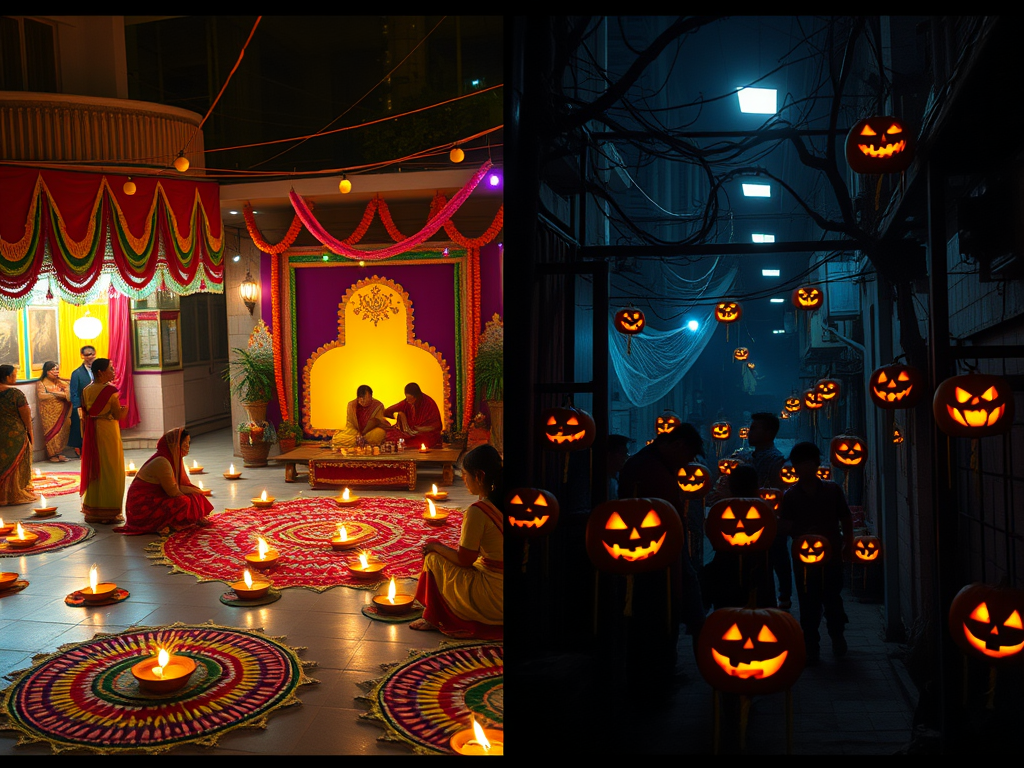
This year, we have Halloween and Diwali on the same day. Two very important festivals with completely contrasting rituals : Where Spooky Meets Sparkling!
What is Diwali?
Diwali, also known as the Festival of Lights, is celebrated for various cultural, religious, and historical reasons across different communities, particularly in India and among Hindus worldwide.

Why do people celebrate Diwali:
- Return of Lord Rama: In Hindu tradition, Diwali marks the return of Lord Rama to Ayodhya after defeating the demon king Ravana. The people lit oil lamps (diyas) to welcome him back, symbolizing the victory of light over darkness.
- Goddess Lakshmi’s Worship: Diwali is also associated with Lakshmi, the goddess of wealth and prosperity. Many people perform pujas (prayer rituals) to invite her blessings into their homes and businesses for the coming year.
- Harvest Festival: In many regions, Diwali coincides with the harvest season, and it’s a time to celebrate the bounty of crops and express gratitude for the harvest.
- New Beginnings: Diwali signifies new beginnings. The festival marks the end of the old year and the advent of the new year in some Indian calendars, and it’s a time for people to make resolutions and start afresh.
- Cultural Unity: Beyond religious significance, Diwali promotes community bonding and cultural unity, as people from diverse backgrounds come together to celebrate through shared customs, festivals, and meals.
Diwali is a time of joy, celebration, and reflection, emphasizing the themes of happiness, goodwill, and the importance of light in one’s life.
What is Halloween?
Halloween, celebrated on October 31st, is a festival with roots in ancient Celtic traditions, particularly the festival of Samhain, which marked the end of the harvest season and the beginning of winter. It is a time when people believe that the boundary between the living and the dead is blurred, allowing spirits to roam the Earth.
Key Aspects of Halloween:
- Costumes and Masks: Traditionally, people wear costumes and masks to disguise themselves from roaming spirits. Today, this practice has evolved into dressing up as various characters, from spooky to funny.
- Trick-or-Treating: Children go door-to-door, asking for treats in exchange for a “trick” if no treat is given. This custom is rooted in the ancient practice of “souling,” where the poor would go begging for food in exchange for prayers for the dead.
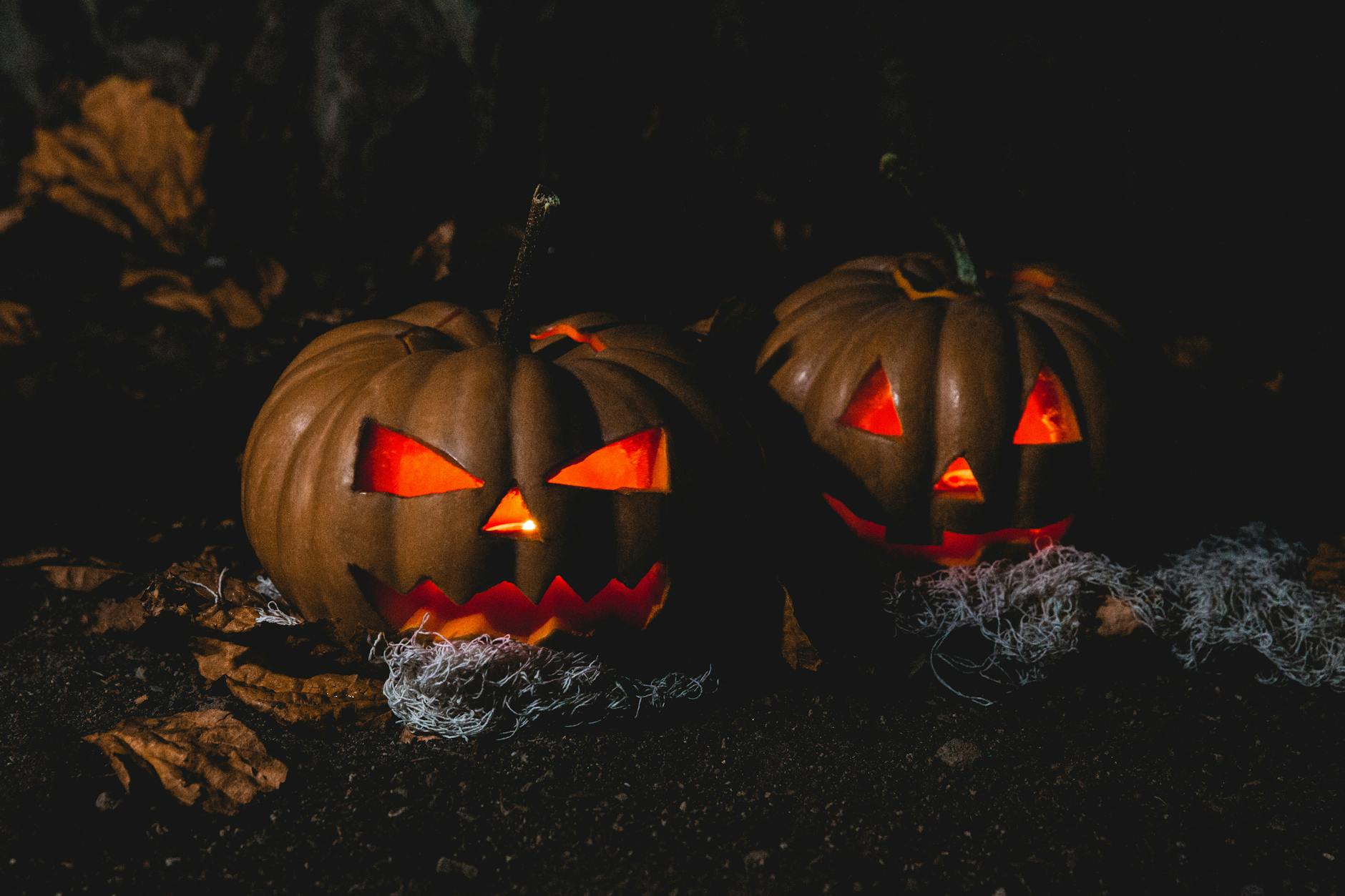
- Jack-o’-Lanterns: Carving pumpkins into Jack-o’-lanterns is a popular tradition. The original custom involved hollowing out turnips or beets, but the pumpkin became the preferred choice in North America.
- Haunted Attractions: Many places feature haunted houses or spooky trails during the Halloween season, where people can explore scary themes in a fun, interactive way.
- Festive Treats: Halloween is also synonymous with candy, particularly seasonal sweets that are often themed around ghosts, pumpkins, and other spooky elements.
Overall, Halloween is a celebration that blends ancient customs with modern fun, emphasizing themes of fear, superstition, and community celebration.
You can also turn in to our blog for insights on Math & tutoring.
Cheers!! ❤ Happy Diwali 🪔 and happy Halloween 🎃
 Sharma & Sharma